
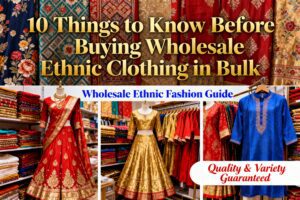
Buying wholesale ethnic clothing in bulk can transform your business if you plan it smartly. When you understand your customers, choose the right suppliers, and manage quality and pricing carefully, you protect your margins and build a strong brand. This guide walks you through the most important things to know before placing large wholesale orders, especially if you deal in sarees, suits, lehengas, kurtis, and other Indian ethnic wear.
1. Understand Your Market Before Buying Wholesale Ethnic Clothing
Before you even think about placing a bulk order of wholesale ethnic clothing, get crystal clear about who you are selling to. Your inventory should never be based on guesswork or what “looks nice” to you. It must match the tastes, budget, and lifestyle of your target buyers.
- Identify your primary audience: Are your customers young college-going women, working professionals, NRIs, brides, or budget-conscious families?
- Study your location and platform: Customers in Delhi, Mumbai, and Surat may prefer trend-driven designs, while Tier 2 and Tier 3 cities might respond better to classic, evergreen styles.
- Track what sells: Look at your past sales, online analytics, and customer feedback to see which categories move faster—sarees, suits, gowns, lehengas, or kurtis.
When you understand your market clearly, your wholesale ethnic clothing orders become sharper and more profitable. You avoid dead stock and invest in styles your customers actually want.
2. Research Reliable Wholesale Ethnic Clothing Suppliers
Your choice of supplier can make or break your business. A good supplier offers consistent quality, fair pricing, and timely delivery, while a poor one causes delays, returns, and angry customers.
Start by shortlisting multiple wholesale ethnic clothing suppliers, not just one. Explore:
- Offline hubs like Chandni Chowk, Gandhi Nagar, Surat Textile Market, and other regional wholesale markets.
- Online B2B platforms, manufacturer websites, and verified directories.
- Recommendations from fellow retailers, boutique owners, or industry groups.
When you shortlist suppliers, check:
- How long they have been in business.
- What segments they specialize in (sarees, suits, bridal lehengas, casual kurtis, plus-size ethnic wear, etc.).
- Reviews, testimonials, and social proof like photos, catalog consistency, and repeat clients.
Reliable suppliers are transparent about pricing, fabric details, MOQ (Minimum Order Quantity), and delivery timelines. They communicate clearly and respond quickly, especially when you place bulk orders of wholesale ethnic clothing.
3. Check Product Quality in Wholesale Ethnic Clothing
Quality is non-negotiable in ethnic wear because your customers notice everything: fabric feel, stitching, fall, and finishing. One bad batch of wholesale ethnic clothing can damage your reputation and lead to returns.
Always request samples before committing to big quantities. When you receive samples:
- Touch and feel the fabric to check softness, thickness, and comfort.
- Inspect stitching from inside and outside; loose threads or uneven seams are red flags.
- Check color consistency, print clarity, and alignment of borders and motifs.
- If possible, test for shrinkage and color bleeding by washing a sample.
For ethnic clothing, fabrics like cotton, georgette, chiffon, silk blends, modal, muslin, and Banarasi or jacquard weaves are popular. Ensure the quality matches the price you plan to charge. When your wholesale ethnic clothing maintains consistent quality, customers trust your brand and return for repeat purchases.
4. Compare Prices and Negotiate Smartly
Buying wholesale ethnic clothing in bulk gives you strong negotiation power—if you use it wisely. Never finalize the first quote you receive. Instead, collect pricing from at least three to five suppliers for similar-quality products.
While comparing prices:
- Look beyond the per-piece rate. Ask about GST, shipping charges, packaging costs, and customization fees.
- Clarify whether the price changes with higher quantities or mixed designs.
- Check if they offer special festival-season rates or loyalty discounts for regular buyers.
Negotiate politely but firmly. Share your target pricing based on your market and margins. Many wholesale ethnic clothing suppliers are willing to adjust if they see long-term business potential. Aim for a win-win: fair rates for you and sustainable profit for them.
5. Confirm Trend Alignment in Wholesale Ethnic Clothing
Ethnic fashion trends change quickly, especially during wedding and festive seasons. If your wholesale ethnic clothing does not align with current trends, your stock will sit on the shelf while customers walk to a competitor.
Keep an eye on:
- Seasonal trends: Pastel florals and lightweight fabrics for summer functions; rich brocades, velvets, and jewel tones for winter weddings and festivals.
- Popular silhouettes: A-line kurtis, straight-cut suits, Anarkali sets, pre-stitched sarees, crop-top lehenga sets, and Indo-Western fusion pieces.
- Social media and influencers: Instagram, YouTube, and Pinterest give strong signals about what is trending in Indian ethnic wear.
Attend trade shows, fashion exhibitions, or textile fairs whenever possible. Ask your wholesale ethnic clothing supplier what is selling fastest for other clients. When your designs follow trends while keeping some evergreen pieces, your collection feels fresh and saleable.
6. Check MOQs and Inventory Flexibility for Wholesale Ethnic Clothing
Most wholesale ethnic clothing suppliers follow minimum order quantities (MOQs), either per design or per category. Understanding MOQs clearly helps you plan your cash flow and stock mix.
Clarify:
- Do you need to take 10–20 pieces of the same design and color, or can you mix sizes and shades?
- Is there a total order value minimum, like ₹25,000 or ₹50,000, to qualify for wholesale rates?
- Can you place smaller repeat orders once you test designs in your market?
If you are just starting or testing new patterns, look for suppliers offering flexible MOQs or assorted catalog lots. This allows you to display variety without blocking too much money in one design. Over time, as you understand what sells, you can safely increase quantities on best-sellers in your wholesale ethnic clothing range.
7. Evaluate Payment and Delivery Terms Carefully
Many business problems start not with products, but with unclear financial and delivery terms. Before sending money, discuss every detail of payment and logistics with your wholesale ethnic clothing supplier.
Cover points like:
- Payment structure: How much advance is required? Is part-payment possible? Are there credit terms for repeat clients?
- Accepted modes: Bank transfer, UPI, cheque, or online gateway.
- Dispatch time: How many working days after payment or order confirmation?
- Courier or transport: Who arranges it—supplier or you? Is door delivery available?
- Tracking and insurance: Will you receive tracking details? Is there insurance for transit damage or loss?
Clear terms protect both sides. You can plan launches, online listings, and in-store displays once you know exactly when your wholesale ethnic clothing will arrive.
8. Inspect Return and Exchange Policies for Wholesale Ethnic Clothing
Even with careful checking, issues can arise: color mismatches, wrong sizes, stitching defects, or incorrect quantities. A clear return and exchange policy is essential when dealing with wholesale ethnic clothing.
Ask each supplier:
- In what situations do they accept returns or exchanges—only for defects, or also for wrong dispatch?
- Within how many days must you report issues after receiving goods?
- Do they offer pickup arrangements, or do you ship back at your cost?
- How do they handle partial issues in a bulk lot—credit note, replacement, or refund?
Get these policies in writing through email or WhatsApp before placing large orders. A supplier with a fair and transparent policy builds trust and helps you manage risk in your wholesale ethnic clothing business.
9. Ask for Customization and Sizing Support in Wholesale Ethnic Clothing
Customization adds strong value to your brand and helps you stand out from other resellers. Many buyers love exclusive pieces, personal branding, or extended sizes, especially in ethnic wear.
Discuss with your wholesale ethnic clothing supplier:
- Labeling: Can they stitch your brand labels or tags on the garments?
- Design tweaks: Minor color variations, border changes, or sleeve adjustments.
- Embroidery and embellishments: Custom motifs, logo placement, or special trims for premium clients.
- Size range: Whether they can provide XS–5XL or plus-size options in popular designs.
When you offer well-fitting sizes and exclusive details, customers remember your store and are more likely to return. Over time, this also positions your brand as more than just another reseller of wholesale ethnic clothing.
10. Build Long-Term Relationships with Wholesale Ethnic Clothing Suppliers
The final and most underrated point is relationship-building. Wholesale ethnic clothing is not just a transactional business; it runs on trust, understanding, and consistency.
To build strong relationships:
- Pay on time and honor agreed terms.
- Communicate clearly about your requirements, feedback, and future plans.
- Share your sales response with suppliers so they can suggest better designs.
- Be professional during disputes and focus on solutions, not blame.
When you become a valued long-term buyer, suppliers often:
- Give you early access to new catalogs.
- Reserve fresh stock for you during peak seasons.
- Offer better payment terms or small credits.
- Support you during urgent or last-minute orders.
These advantages directly impact your growth and stability in the wholesale ethnic clothing market.
Conclusion: Make Smart Decisions with Wholesale Ethnic Clothing in Bulk
Buying wholesale ethnic clothing in bulk is a powerful way to grow your business, but only when you plan it with clarity and discipline. When you understand your customers, vet your suppliers, check quality, negotiate well, align with trends, and manage policies and relationships, you reduce risk and increase profit.
Use this 10-step approach as a checklist before every major order:
- Know your market.
- Choose reliable wholesale ethnic clothing suppliers.
- Prioritize quality and fit.
- Protect your margins with smart pricing and terms.
- Build relationships that support you for years.